Tips for Maintaining a Slate Roof to Lengthen Its Lifespan
Slate roofs are known for their natural beauty, durability, and long service life. When properly installed and maintained, slate roofing can protect a home for decades. However, even the strongest roofing materials require regular care. Simple maintenance steps can help preserve the slate, prevent water intrusion, and reduce the risk of costly repairs.
Schedule Professional Roof Inspections
Regular professional inspections are one of the best ways to protect a slate roof. A qualified roofing contractor can identify cracked, broken, loose, or missing slates before they allow water to enter the structure. Inspections can also reveal problems with flashing, valleys, underlayment, fasteners, and other components that support the roof’s performance.
It is helpful to schedule an inspection at least once a year and after major storms. Because slate can be fragile under foot, homeowners should avoid walking on the roof or attempting to inspect elevated areas without professional assistance.
Replace Damaged Slates Promptly
Individual slate tiles can crack or become dislodged because of severe weather, falling branches, temperature changes, or aging fasteners. A damaged slate may not cause an immediate leak, but leaving it in place can expose the underlying roofing materials to moisture.
Prompt slate replacement can help prevent water damage and preserve the surrounding tiles. Repairs should be completed by a contractor familiar with slate roofing, as improper tools or techniques may damage nearby slates and create additional problems.
Keep Gutters and Downspouts Clear
Clogged gutters can cause water to back up beneath the edges of a slate roof. This moisture may damage roof decking, fascia boards, soffits, siding, and interior walls. Leaves, twigs, and other debris should be removed regularly to keep rainwater flowing away from the home.
Downspouts should also discharge water a safe distance from the foundation. If gutters pull away from the roofline or show signs of rust and damage, have them repaired or replaced to support proper drainage.
Maintain Flashing & Sealants
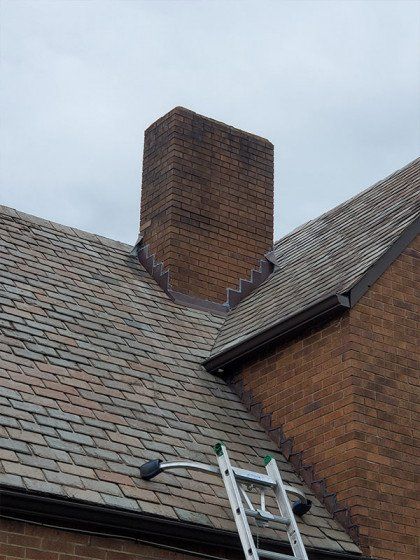
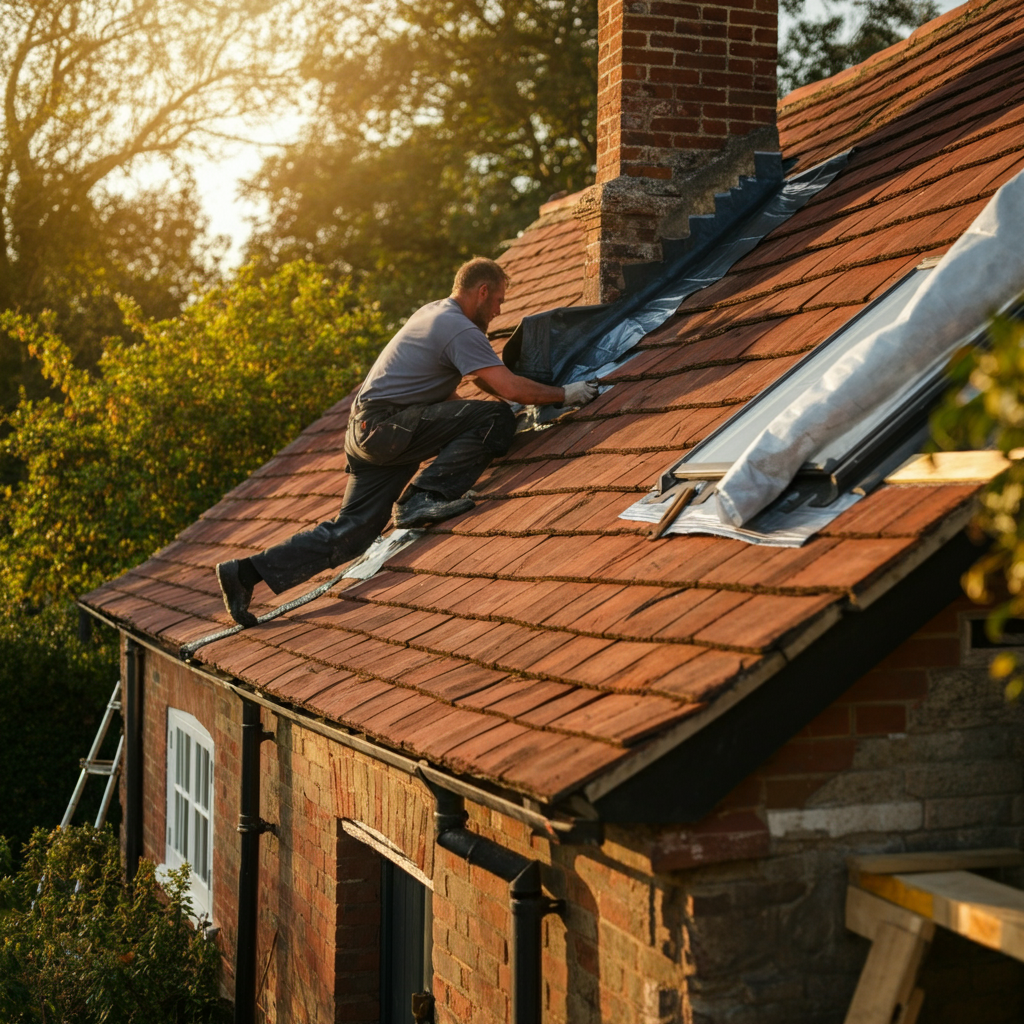
Flashing helps direct water away from vulnerable areas such as chimneys, skylights, roof valleys, walls, and penetrations. Over time, flashing can corrode, loosen, or develop gaps. Deteriorated sealants may also allow water to reach the roof structure.
During a professional inspection, ask your roofing contractor to examine all flashing and sealant points. Addressing small gaps or loose sections early can help prevent more extensive moisture damage.
Trim Nearby Trees
Overhanging tree branches can scrape against slate tiles, drop debris onto the roof, and create pathways for moss or algae growth. Large branches may also break during storms and damage the roof. Keeping trees trimmed away from the structure can help reduce these risks.
Tree maintenance should be performed carefully to avoid damaging the roof or gutters. If branches are close to the roofline, consider hiring a qualified tree service to complete the work safely.
Watch for Moss, Algae & Debris
Moisture and organic debris can encourage moss, algae, and lichen growth on slate roofs. These materials may retain moisture and place stress on the slate or fasteners. Debris can also block drainage channels and hide damaged tiles.
Do not pressure-wash a slate roof or use harsh cleaning products without professional guidance. Aggressive cleaning methods can chip or break slate. A roofing contractor can recommend a safe cleaning approach if growth or debris becomes a concern.
Avoid Unnecessary Roof Traffic
Slate is durable, but individual tiles can break when stepped on incorrectly. Homeowners should avoid walking on the roof, placing equipment on the slate, or allowing untrained workers to access it. Antennas, solar equipment, holiday decorations, and other installations should be handled by professionals who understand how to work around slate.
Reducing unnecessary foot traffic helps protect the surface and lowers the chance of accidental damage.
Support Proper Attic Ventilation
Adequate attic ventilation helps control heat and moisture beneath the roof. Poor ventilation can contribute to condensation, wood deterioration, mold growth, and premature aging of roofing materials. A contractor can evaluate intake and exhaust ventilation to determine whether improvements are needed.
Proper ventilation is especially important in areas with significant seasonal temperature changes. Maintaining balanced airflow may help support the performance of the roof system and the comfort of the home.
Contact Our Team to Request Slate Roof Repair & More
Slate roofs require specialized knowledge and care. A contractor experienced with slate roofing will understand how to identify compatible replacement materials, access the roof safely, repair flashing, and complete maintenance without causing unnecessary damage.
Keeping this in mind, we urge you to contact one of the certified team members at Young Slate Roofing. For years, our qualified crew has continued to provide dedicated slate roof repairs and much more across Pittsburgh, PA and all the surrounding communities. Simply reach out to our local company to restore your slate roofing surface to like-new condition!